


Power Flows:
Power flows are not directed, but rather follow “the path of least resistance”. Technically it is the path of least impedance. Impedance (Z) is the AC equivalent of resistance (how difficult it is for alternating current to pass along a conductor).
Reactance is typically the dominant factor of impedance in a transmission line (reactance(X) >> resistance(R))
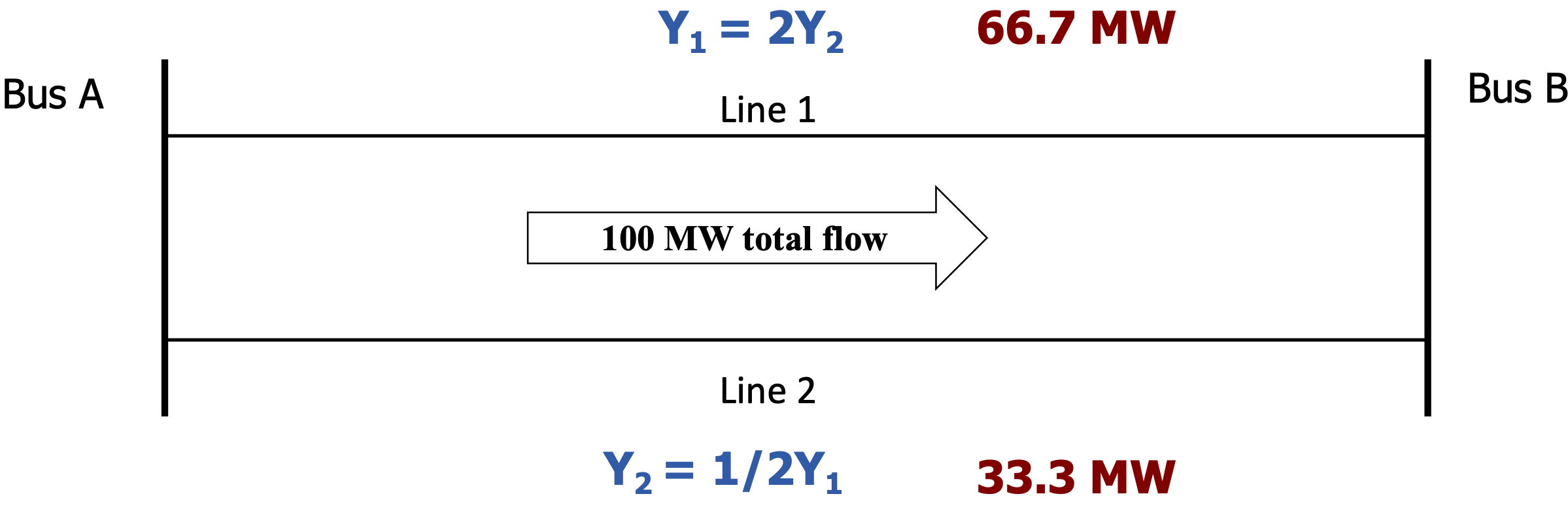
Power flows across parallel circuits in proportion to their admittance (denoted Y), or in inverse proportion to impedance (Z)
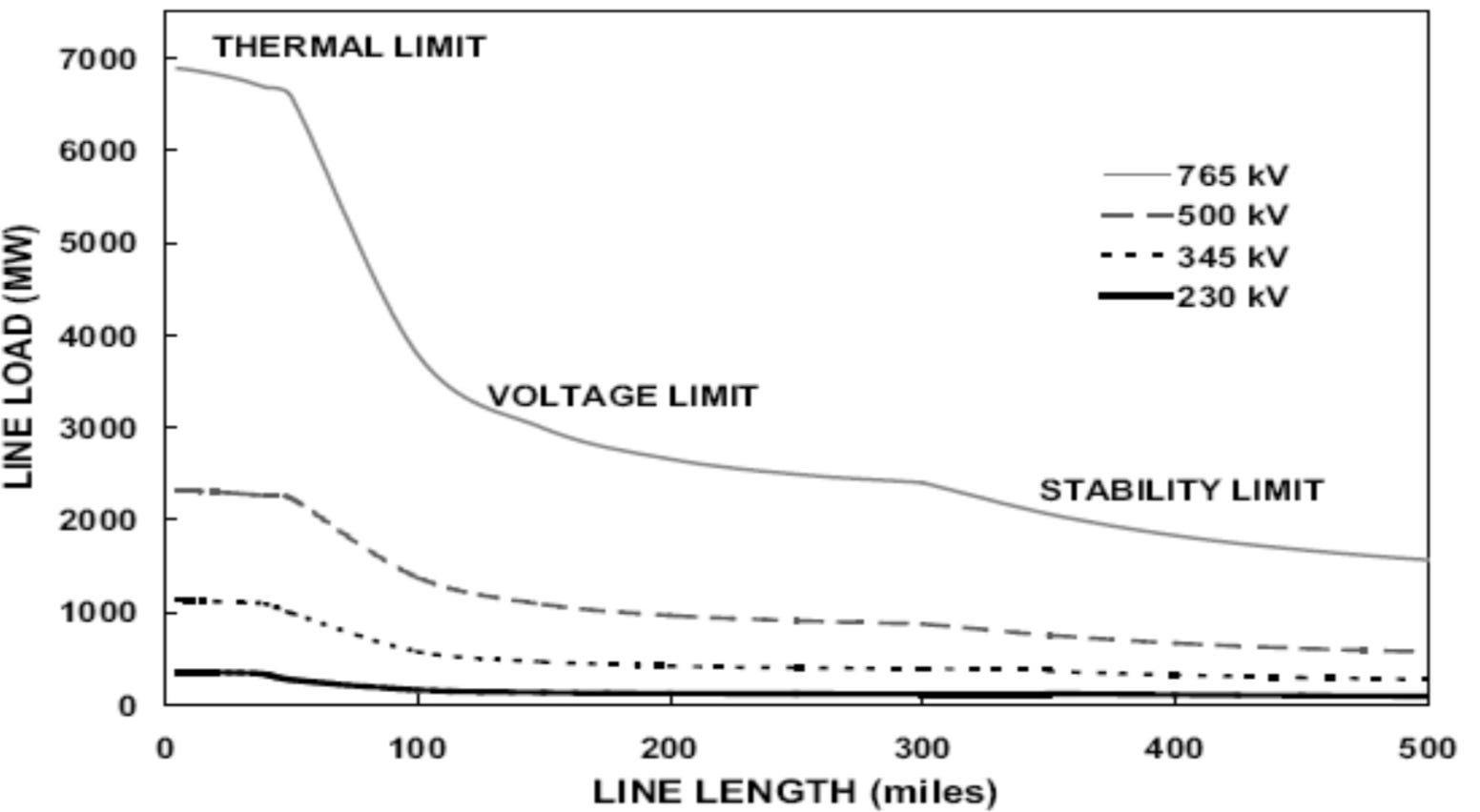
Transmission congestion: Grid congestion occurs when the maximum current that can be handled by a line (or other facility such as a transformer) is reached. The reasons can be:
Thermal limits of a line: Heat from resistive losses (and ambient temps) causes the line to sag, or conductors to anneal
Voltage limits at each node: Utility and consumer equipment designed to operate a certain supply voltage, so voltage can’t stray too far from nominal voltage, generally within +/- 5%
Stability limits (N-1 system security-related constraints): Lines operated at a safety margin to avoid transient voltage instabilities after ‘contingencies’ or failures of transmission or generators
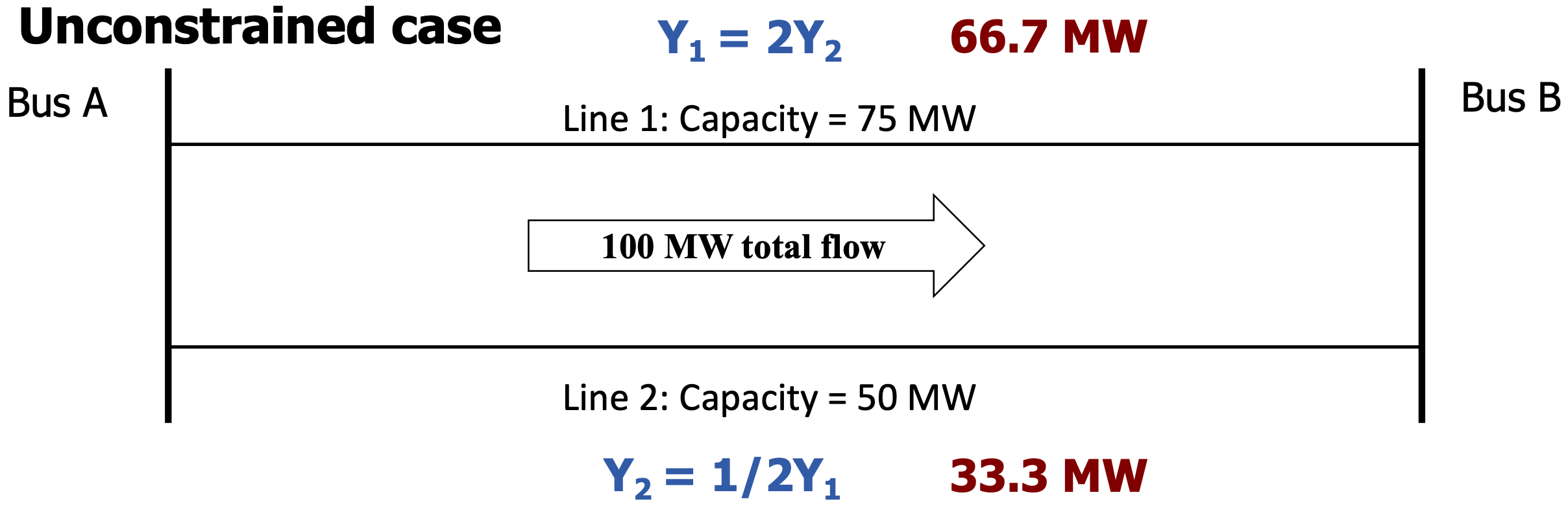
Since power flows across parallel paths in proportion to admittance, congestion on one path can limit overall flows across all parallel paths
Transmission networks are “meshed” and contain many loops, parallel paths complex flows. Resistance of transmission lines is low, but they are not perfect conductors; Ohmic or resistive losses occur as current encounters resistance; energy is dissipated as heat.
Locational Marginal Pricing:
Marginal pricing: Electricity prices reflect the short-run marginal cost of the most expensive generator that “clears” or is dispatched to meet demand. Without the impact of transmission networks, there would be a single price across the entire system
When transmission losses and congestions are taken into account, the marginal cost of supplying an increment of demand (“system marginal cost”) varies by location
Locational marginal prices (LMPs) = short-run marginal system cost at every node or location in the system
LMPs/nodal pricing/spot pricing internalize all network effects (losses and congestions) on the marginal cost of supply at any location
Payment based on LMPs:
Consumers (or their load-serving entities/retailers) pay LMP at the node* they withdraw from the system. Generators are paid LMP at the node they inject into the system
Consumers > Generators